
Battery Electric

CCS

Type 2

Range: 110-135 miles

Electric Cost: 7.38p - 7.93p

Rapid Charge: Yes

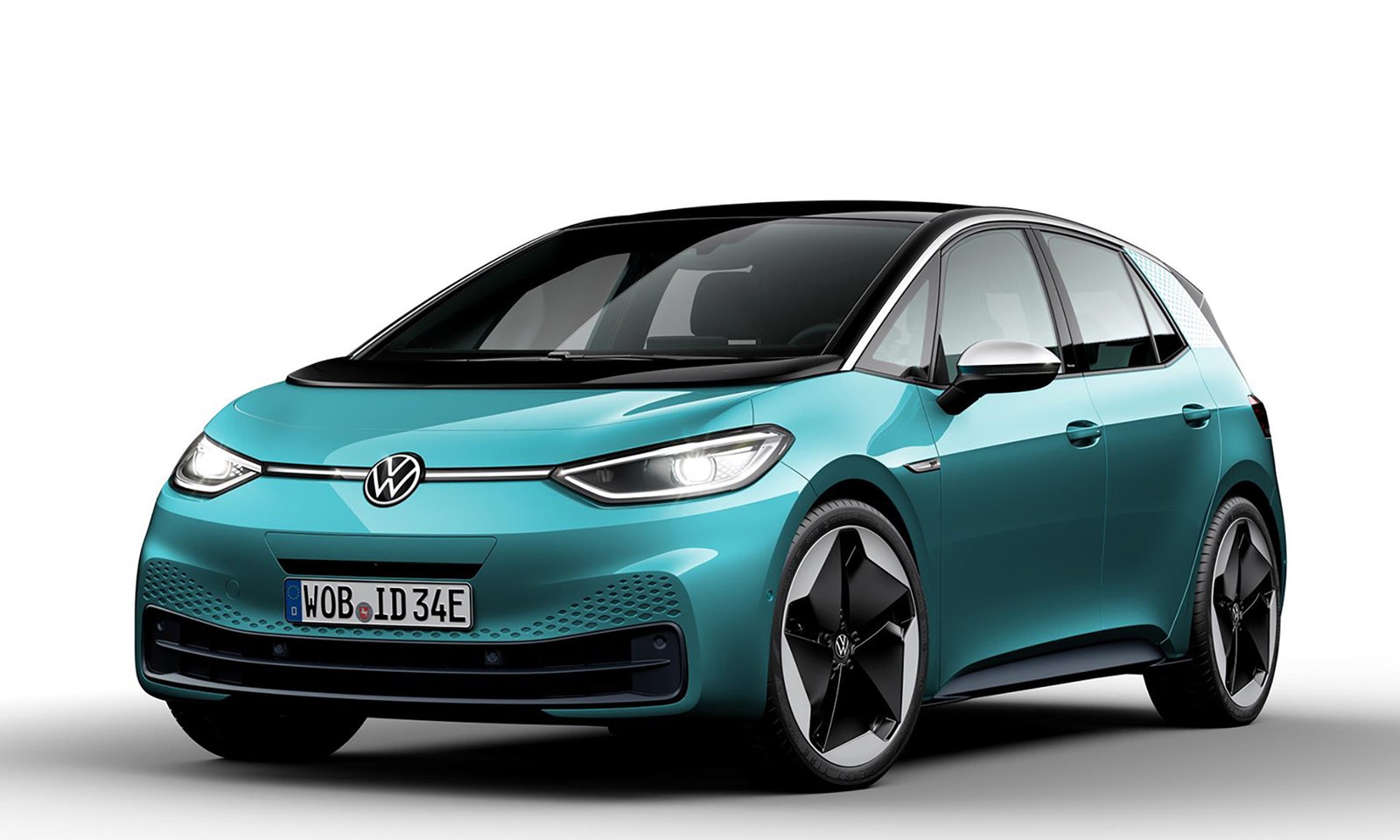
Volkswagen ID.3 (2020)

The complete guide to the Volkswagen ID.3 (2020), from the car itself to running costs and charging.

OVERVIEW:

The ID.3 is Volkswagen’s first opportunity to prove just how serious they are about EVs, with a stylish, high-range, affordable BEV model geared for the mass market. The data in this guide is for the whole range of different battery sizes, from the entry-level 45kWh models – which have solid, if not exceptional range and performance figures, through to the more premium mid-size (58kWh) and large (77kWh) battery variants – which offer both range and performance in spades. Ultra-modern interiors and bundles of available tech add to the appeal of the ultra-dependable German household name. So, happily, the ID.3 shows VW coming good on their electric promise.

Charging Details :

Charging time for a Volkswagen ID.3

The table below shows the estimated time to charge your ID.3 from empty to full. For rapid charging, we show the time to charge from 20% – 80%, as charging tends to slow outside this range to protect the battery.

Charging method Typically found at Charging time* Range/hour**
Empty to full
3-pin plug Home 24 – 36 h 8 – 9 m/h
3.6kW Home / Work 15 – 22 h 13 – 14 m/h
7kW Home / Work / Public Locations 8 – 12 h 25 – 27 m/h
22kW Work / Public Locations 6 – 8 h 25 – 42 m/h
20%-80%
50kW Public Locations 40 – 60 min 88 – 95 m/30 min
150kW Public Locations 20 – 30 min 194 – 243 m/30 min

* Based on EV Made Easy estimates, charging time can differ based on the ambient temperature, the state of the battery (e.g. empty or half full) and variation in charging rate. Max charging rate may also be limited by the vehicle.
** Range per hour is the number of miles you can expect to get from an hour of charging at the relevant rate.

Connector type and charging rates

You can charge your Volkswagen ID.3 with a Type 2 connector at home, work or at a public charging point. There is also a CCS connector for rapid charging.

Slow / Fast: Type 2Max AC 1-phase rate: 7.2kWMax AC 3-phase rate: 11kW* Rapid: CCSMax DC rate: 110 – 135kW
Connector location: Right Side – Rear Connector location: Right Side – Rear

* Optional for smallest battery size ID.3 Pure.

Where you can charge a VW ID.3

You can charge your VW ID.3 conveniently at home, plug-in when you arrive at work or top up (mostly for free!) when you’re out and about at locations including supermarkets and public car parks.


At Home

7kw Smart Chargers from £899*

Find out more about Smart Home Charging 


At Work

7k or 22kW Smart Charger**


Find out more about Workplace EV Charging 


Shared parking

7kW or 22kW Smart Charger


Find out more about Residential EV Charging


On Public Networks

7kW or 22kw Smart Charger & Rapid Charging***


Charging on the EV Made Easy Network 


* Standard pricing, excludes any grants.
** Other charging options are also available, speak to our team for more information.
*** Available for vehicles with either CCS or CHAdeMO connectors.
Recommended Chargers:

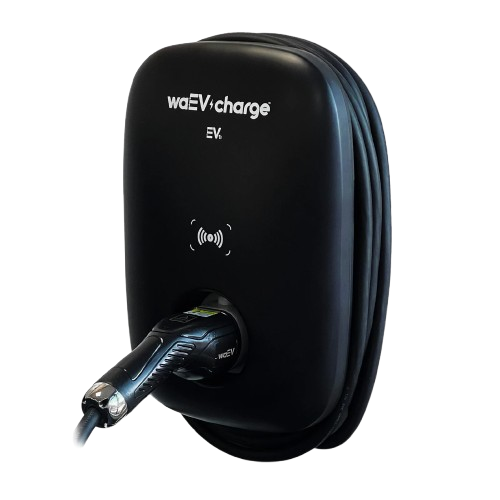
WaEV EV1i

Charger & Install from

£875 (including VAT)

Smart Charging

Fuse protection

3 Year Warranty

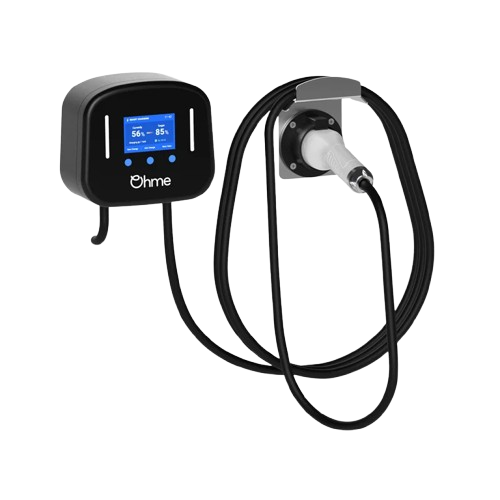
Ohme Home Pro

Charger & Install from

£995 (including VAT)

Smart Charging

Fuse Protection

Cost to charge :

Cost of charging a Volkswagen ID.3

The cost of charging your car will vary between home, work and public chargepoints (below are our estimates).

Place Avg. cost Cost/mile
Home (empty to full)* £14.63 – £21.56 7.38p – 7.93p
Public rapid chargers (20%-80%)** £13.79 – £20.33 11.59p – 12.46p

* Assumes tariff of 28p/kWh. The cost of home charging will vary depending on your electricity rate.
** Assumes tariff of 44p/kWh applicable to most network rapid chargers as of April 2022.

Vehicle Specs :

Range
Official range (WLTP*) 217 – 340 miles
EV Made Easy Confidence Range** 184 – 289 miles

* For more information on “WLTP”, “NEDC” and more, please visit our Electric Vehicle Dictionary.
** EV Made Easy Confidence Range is the maximum distance we’d be confident driving on electric power between charges. Real range will depend on various factors including driving conditions, personal driving style, outside temperature, heating / air conditioning, etc.

Performance
0-62 mph 8.9 – 7.3 seconds
Top speed 99 mph
Engine power 148 – 201 bhp / 110 – 150 kW
Torque 310 Nm
Battery
Battery size 55 – 82 kWh
Usable battery (EV Made Easy estimate) 52 – 77 kWh
Official battery efficiency (WLTP) 260 – 275 Wh/mile
Battery efficiency (EV Made Easy estimate) 263 – 283 Wh/mile
Environmental impact
Official MPG (WLTP) N/A
Official CO2 emissions (WLTP) 0 gCO2/km
CO2 emissions from UK grid electricity usage (EV Made Easy calculated)* 31 – 33 gCO2/km

* This metric estimates the environmental impact of driving your electric vehicle based on how the electricity that powers your car is generated. We take the average carbon intensity across the UK grid measured throughout 2021 to calculate the expected grams of CO2 emitted per 1 km driven. The actual number will vary by region, when you charge (e.g. carbon intensity is usually lower overnight period) and whether your electricity comes from more renewable sources than the average.

Purchase, Tax & Grants:

The Volkswagen ID.3 is eligible for the OZEV Plug-in Car and EV chargepoint grants. You will also benefit from £0 road tax and £0 London Congestion Charge.

Purchase
OTR price* From £27,135
Vehicle warranty 6 years / 100,000 miles
Battery warranty 8 years / 100,000 miles

* On-the-road price including Plug-in Car Grant, if applicable.

Tax
Vehicle Excise Duty (VED) Amount
Year 1 £0
Years 2-5 £0
Benefit in Kind (BiK) tax year BiK tax rate Annual BiK value
For cars registered after 6 April 2020
22/23 2% From £542
23/24 2% From £542
24/25 2% From £542

* For further information including how to calculate personal BiK liabilities, please visit our Electric Car Tax guide.

Local taxes Amount
London Congestion Zone Charge* £0
Ultra Low Emission Zone Charge** £0

* A £10 annual registration fee will still apply to each vehicle.
** For further information on London’s Ultra Low Emission Zones (ULEZ), please visit our ULEZ guide.

Insurance
Insurance group 23-30
Grants*
Grant name Eligibility Amount Benefit
OZEV EV chargepoint grant £350 Can be used to reduce the cost of a home charger with installation
OZEV Plug-in Car Grant up to £1,500 Used to reduce the cost of the vehicle
EST Domestic Charge Point Grant £250 Can be used in Scotland in addition to the EV chargepoint grant to reduce the cost of a home charger with installation

* Prices for vehicles are typically displayed with the Plug-in Car grant discount already applied. Home charging grants are dependent on status of the grant, and subject to eligibility requirements of the applicant as well as the vehicle.